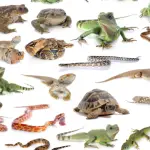
Ecology and behavior are important areas of study in the field of herpetology, as they allow us to understand the relationships between reptiles and amphibians and their environment. In this article, we will explore the ecology and behavior of these fascinating animals.
Ecology of Reptiles and Amphibians
Reptiles and amphibians have adapted to a wide variety of habitats, including terrestrial, aquatic, and arboreal environments. The ecology of these animals is closely linked to their behavior, physiology, and morphology.
For example, some reptiles, such as snakes and lizards, are carnivorous and have specialized teeth and jaws for capturing and consuming prey. Other reptiles, such as turtles and tortoises, are herbivorous and have broad, flat teeth for grinding up plant material. Amphibians, on the other hand, have a variety of feeding strategies, including carnivorous, herbivorous, and omnivorous diets.
Reptiles and amphibians also play important roles in their ecosystems, both as predators and prey. For example, some snakes are top predators in their food webs, while other reptiles and amphibians serve as important prey items for larger animals.
Behavior of Reptiles and Amphibians
Reptiles and amphibians exhibit a wide range of behaviors, from territoriality and courtship displays to migration and hibernation. These behaviors are influenced by environmental factors such as temperature, humidity, and photoperiod.
One of the most well-known behaviors of amphibians is their vocalizations, which are used for communication and mating purposes. Frogs and toads, in particular, are known for their distinctive calls, which vary in pitch, duration, and volume depending on the species.
Reptiles and amphibians also exhibit a variety of reproductive behaviors. Some species lay eggs, while others give birth to live young. Some species exhibit parental care, such as guarding eggs or young, while others exhibit no parental care at all.
Conclusion
In conclusion, the ecology and behavior of reptiles and amphibians are fascinating and complex. These animals have adapted to their environments in unique ways, which is reflected in their behavior, morphology, and physiology. Understanding the ecology and behavior of these animals is crucial for their conservation and management, as well as for advancing our knowledge of their behavior, ecology, and evolution.