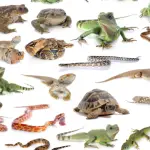
Classification and taxonomy are important areas of study in the field of herpetology, as they allow scientists to organize and categorize the vast array of reptiles and amphibians that exist. In this article, we will explore the classification and taxonomy of these fascinating animals.
Classification of Reptiles and Amphibians
Reptiles and amphibians are two separate classes of animals, each with their own unique characteristics. The classification of reptiles and amphibians is based on their physical features, behavior, and evolutionary relationships.
Reptiles are classified into four orders: Crocodilia, Squamata, Testudines, and Rhynchocephalia. Crocodilia includes alligators and crocodiles, while Squamata includes lizards and snakes. Testudines includes turtles and tortoises, while Rhynchocephalia includes only the tuatara, a lizard-like reptile found only in New Zealand.
Amphibians are classified into three orders: Anura, Caudata, and Gymnophiona. Anura includes frogs and toads, while Caudata includes salamanders and newts. Gymnophiona includes caecilians, a group of limbless amphibians found primarily in the tropics.
Taxonomy of Reptiles and Amphibians
Taxonomy is the science of naming, defining, and classifying groups of biological organisms based on their characteristics and evolutionary relationships. Reptiles and amphibians are classified based on a system developed by the Swedish naturalist Carl Linnaeus in the 18th century, which uses a hierarchy of categories to organize species into groups.
The taxonomic hierarchy for reptiles and amphibians is as follows, from broadest to most specific:
Kingdom: Animalia (animals)
Phylum: Chordata (animals with a backbone)
Subphylum: Vertebrata (animals with a vertebral column)
Class: Reptilia or Amphibia
Order: Crocodilia, Squamata, Testudines, Rhynchocephalia (reptiles); Anura, Caudata, Gymnophiona (amphibians)
Family: A group of genera that share similar characteristics
Genus: A group of closely related species
Species: A group of individuals that can interbreed and produce fertile offspring
For example, the American alligator (Alligator mississippiensis) belongs to the class Reptilia, the order Crocodilia, the family Alligatoridae, and the genus Alligator. Its scientific name, therefore, is Alligator mississippiensis.
Conclusion
In conclusion, the classification and taxonomy of reptiles and amphibians are important fields of study that allow us to understand the evolutionary relationships and characteristics of these animals. With the vast diversity of reptile and amphibian species, the classification and taxonomy of these animals will continue to evolve and be refined as new information is discovered. Understanding the taxonomy of reptiles and amphibians is crucial for their conservation and management, as well as for advancing our knowledge of their behavior, ecology, and evolution.