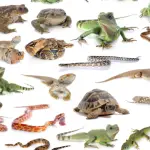
Biogeography is the study of the distribution and historical relationships of living organisms across geographic regions. Reptiles and amphibians are widely distributed across the world, with some species found on every continent except Antarctica. In this article, we will explore the biogeography and distribution of these fascinating animals.
Distribution of Reptiles and Amphibians
Reptiles and amphibians have adapted to a wide range of habitats, from deserts and rainforests to freshwater and marine ecosystems. Some of the most diverse reptile and amphibian communities are found in tropical regions, particularly in Central and South America.
The distribution of reptiles and amphibians is also influenced by factors such as climate, topography, and geological history. For example, the presence of mountains, rivers, and other physical barriers can create isolated habitats that are home to unique species of reptiles and amphibians.
Biogeography of Reptiles and Amphibians
The biogeography of reptiles and amphibians is complex and influenced by historical events such as plate tectonics, climate change, and sea level fluctuations. For example, the separation of continents due to plate tectonics has played a significant role in the distribution of reptiles and amphibians.
Many reptile and amphibian species have ancient origins, and their distributions can be traced back to the break-up of the supercontinent Pangaea. For example, the tuatara, a lizard-like reptile found only in New Zealand, is a living relic of an ancient group of reptiles that was widespread during the time of the dinosaurs.
More recent geological events, such as the formation of the Isthmus of Panama, have also played a role in the distribution of reptiles and amphibians. The closure of the Isthmus of Panama connected South America to North America, allowing for the exchange of flora and fauna between the two continents. This event had a significant impact on the distribution and evolution of reptiles and amphibians in the Americas.
Human activities, such as habitat destruction and the introduction of non-native species, have also had a significant impact on the distribution of reptiles and amphibians. Many species are threatened with extinction due to these factors, and conservation efforts are necessary to protect these important animals and their habitats.
Conclusion
In conclusion, the biogeography and distribution of reptiles and amphibians are fascinating and complex. These animals have adapted to a wide range of habitats and are found on every continent except Antarctica. Their distributions are influenced by a variety of factors, including climate, topography, and geological history. Understanding the biogeography and distribution of reptiles and amphibians is crucial for their conservation and management, as well as for advancing our knowledge of their behavior, ecology, and evolution